The smallest piece on the board.

Everywhere else, it gets shouted down.

Here, it gets heard out.

In development · September 2026

A place to be heard out.

A non-profit space for political and societal discourse. Open to every view, built to understand before it judges.

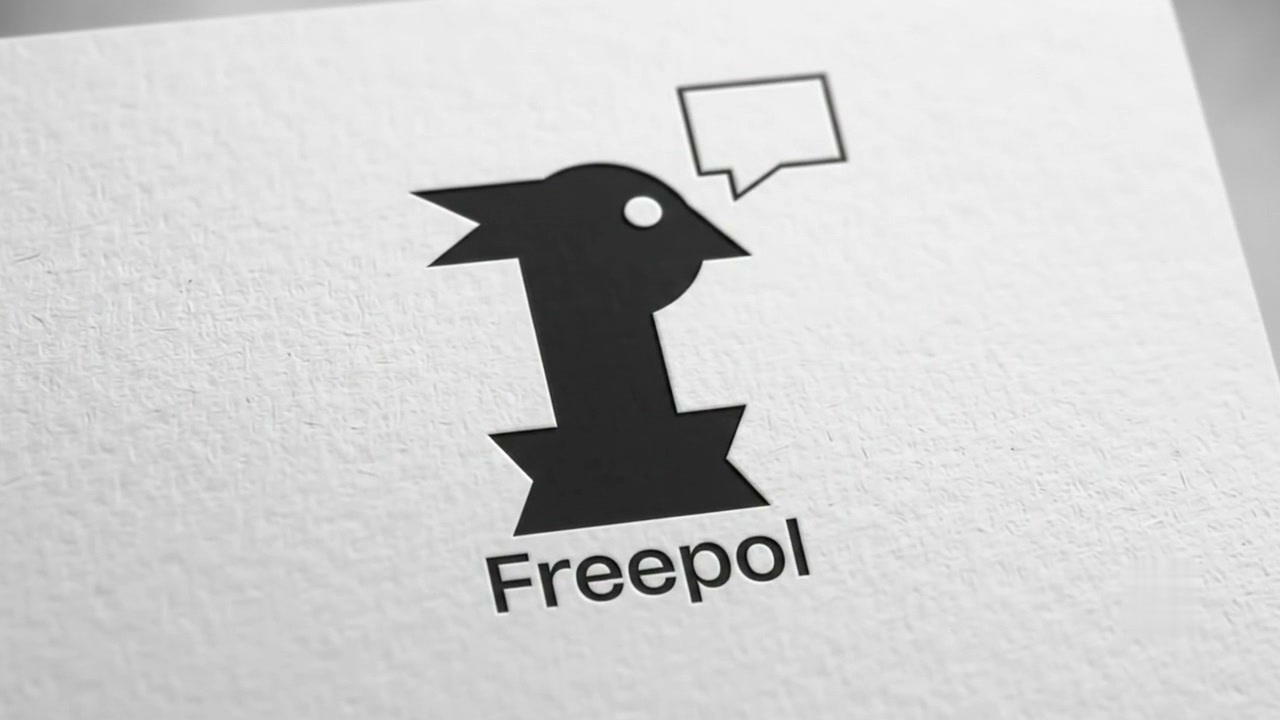
The Freepol mark, a chess pawn with a bird's head and a speech bubble, pressed into paper.

In development · September 2026

A place to be heard out.

A non-profit space for political and societal discourse. Open to every view, built to understand before it judges.

Read the idea The charter
What Freepol is

A place, not a feed.

Freepol is a non-profit platform for political and societal discourse. It is a place to put a view into words, have it read properly, and hear the strongest version of the answer.

It is built by two students who got tired of watching people argue past each other. Not a company, not a campaign, and not for sale.

It is early, but it is real. The charter is written, the discussion is open, and anyone can read it without an account. What it becomes depends a lot on who turns up now.

Non-profit

No advertisers. No investors. Nothing to sell you.

No house view

The platform does not take a side. It is not the referee of who is correct.

In the open

Built in public, rough edges showing.

Explore the idea:

Four words. Read them in order.

Bring the view you actually hold, not the one that plays well.

Most places online reward the version of you that gets applause: sharper, angrier, more certain than you really are. You learn to perform a position instead of holding one.

Freepol is built for the other thing. Say the part you are still working out. A half-formed thought argued honestly beats a confident one you borrowed.

Word one of four

Free speech is the easy half. Being heard is the hard half.

Anyone can speak into the internet. The question is whether anything is listening. A view that gets buried, brigaded, or answered at its weakest has not been heard, whatever the rules say.

So free here means both: you can say it, and it gets read properly before it is answered.

Word two of four

A place, not a feed.

A feed is a river. Things pass, you react, they are gone, and nothing is ever settled. Discourse needs somewhere things stay put long enough to be examined.

Freepol is being built as a place: discussions that hold their shape, arguments you can return to, and positions that are allowed to change without it counting as a defeat.

Word three of four

Free, and political. Both words, on purpose.

Politics is the part of life where we decide things together, and it is currently the part we are worst at discussing. That is not an argument for talking about it less.

Freepol is a non-profit. There are no advertisers to keep comfortable and no investors expecting the temperature turned up. The only thing it answers to is whether the discussion was any good.

Word four of four

Read together: Be free at Freepol.


Try it

Hear it out.

This is the instinct the whole platform is built around, and in a debate it is now the rule: before you argue, you state their case well enough that they would agree that is what they meant. You can also simply agree with a point and add to it, with none of that asked of you, because agreement is part of a debate too. Try it here first.

Should social media be age-restricted for under-16s?

Yes. Put a floor on it.

Position A

The case, at its strongest: adolescence is when identity is least settled and social feedback bites hardest. We already restrict driving, drinking and gambling on exactly that reasoning, and nobody calls those limits an attack on freedom. If the harm evidence holds, an age floor is the ordinary, boring version of a protection we already accept everywhere else.

No. Leave it open.

Position B

The case, at its strongest: a ban takes the good away with the bad. For an isolated teenager the group chat is the friendship, and for a queer kid in a hostile town it may be the only safe room they have. Enforcement also means identity checks for everyone, which hands a permanent record of who said what to whoever runs the database. That is a large, certain cost set against a contested benefit.

Both of those are real arguments held by real people. Freepol is the place you meet the strong version first.

A flock of birds flying against a plain white sky.
Freepol, from the founder
Why I started this

Why I started this

My name is Vishveshwar. Most people call me Vish, and I am a student.

I started Freepol because of something I could not stop noticing. On every platform where politics gets discussed, people are not arguing with each other. They are arguing with the worst possible version of each other. Hate is easier than understanding, and faster, so the platforms fill up with it.

The cost is not just that it is unpleasant. The issues that actually need attention stop getting any. All the energy goes into the fight.

So I am building the place I wanted to find. Free of the pile-ons, free of the misinformation, and free of the assumption that someone who disagrees with you is your enemy. No advertisers. No side. Just the discussion, taken seriously.

I am at the beginning of this. If any of it sounds right to you, come and build it with me.

Vish Founder, Freepol

Freepol is not a one-person project any more. Abhijeet Singh is co-founder. We wrote the charter together, arguing it out between us until we agreed, and he designed the thread structure that enforces it. That structure is what turns everything above from an intention into something software can actually hold people to.


Where it stands

Being straight about this matters more than looking finished.

Done

The charter, accounts, and CommonGround itself: two rooms, structured debate with the rules enforced by the database, moderation that leaves a trace, reading open to everyone, pictures and sources on a post, and a dark theme for the people who read at night.

Now

Making it worth staying in. A better first five minutes, and whatever the first real arguments show is missing. Nobody knows yet whether the structure holds when strangers use it.

Next

People. It is open, it works, and it is nearly empty. Finding the ones who want to argue well is the whole job now.

The obvious questions

Answered plainly.

That is the thing most likely to go wrong, and pretending otherwise would be silly. The design work is mostly that one problem: making it normal to state the other side's case properly first, and making a change of mind cost nothing.

No. Not left, not right, and not centrist as a third flavour of the same thing. The platform is not the referee of who is correct. It is responsible for whether the argument was conducted honestly.

Two students. Vishveshwar Raj Soni and Abhijeet Singh, who wrote the charter together by arguing about it until they agreed. It is a non-profit. There are no advertisers and no investors, which is the whole point: nobody here earns more when the arguing gets worse.

Speech is free, and being answered is part of it. The line is behaviour, not opinion: no harassment, no deliberate misinformation, no pile-ons. You can hold a view most people here think is wrong and argue it in full.

Yes. CommonGround is open and you can read all of it right now without an account. Making an account lets you post, reply, vote and save threads, and lets you vote on the charter, which is still deciding what this place is. It is early and it is small. That is what beta means.

In a discussion: words, pictures, video, a PDF, links, and a sticker if you want one. Four files at five megabytes each. In a debate the same things are allowed, but only as evidence: a file has to be attached to something you are stating as fact, with its source. A chart backing a claim belongs there. A reaction picture is not an argument, and the database will not accept one.

No. Anyone can read every open discussion and debate with no account at all. An argument nobody outside can read is not much of an argument. You need an account to take part, because the charter only means something if somebody is attached to each argument.

Not silently. You can delete your own posts, and a note is left where they were so the replies underneath still make sense. A moderator can remove anything, and that leaves a marker saying a moderator removed it, the reason they gave, and a line in a log with their name on it that every moderator can read. A place arguing that people should be heard out, where posts vanish with no trace, would not be following its own argument.

Get involved

Come and build it.

Freepol needs people who want to argue well more than anything else. If that is you, say hello.

thechosenkwisatzhaderach@gmail.com

Or go straight to the part that decides everything. Members vote on the founding charter: the rules argument will run on here, settled before the room opens rather than after something goes wrong.

Join the charter

This opens your own mail app with the message ready. Nothing is stored on this site.